Stake SOL
Earn validator rewards from SOL you already hold. Direct staking pays SOL; liquid staking may accrue through a token.
- Needs
- Existing SOL
- Main risk
- Validator quality, commissions, lockups, and protocol risk

A simple guide to real ways people earn, grow, or recover SOL — and the free-SOL traps to avoid.
Free scan · No signup · You sign every transaction
Most people searching for free Solana want one of two things: a way to earn SOL without buying more, or a way to recover SOL that is already sitting in their wallet but not visible in the main balance.
The important part: there is no reliable public faucet giving meaningful mainnet SOL away for free. If a website says you can claim a large amount of mainnet SOL just by connecting your wallet, treat it as a scam risk until proven otherwise.
Short version: real options are staking rewards, DeFi yields, airdrops and quests, referrals, protocol rewards, or reclaiming SOL that already belongs to your wallet.
These methods are not "free money." Each one has a tradeoff: you may need existing SOL, time, risk tolerance, or previous wallet activity.
Earn validator rewards from SOL you already hold. Direct staking pays SOL; liquid staking may accrue through a token.
Lending, liquidity pools, and farms can produce yield, but they are investment strategies, not free giveaways.
Some projects reward early users or campaign participants. Many rewards arrive as project tokens, not SOL.
Wallets, exchanges, and apps sometimes share bonuses or fee rewards when eligible users sign up.
Old DeFi activity can leave rewards, rebates, or eligible balances behind. Always use official claim sources.
A faucet is a site that sends a tiny amount of crypto to a wallet. On Solana, faucets are mostly useful for devnet or testnet, where tokens have no real market value and exist so developers can test apps.
For mainnet SOL, public faucets are not a serious way to build a balance. If a faucet promises meaningful mainnet SOL, asks you to sign confusing wallet approvals, or asks for an upfront unlock payment, skip it.
Solana wallets can accumulate SOL that is already yours but locked in unused accounts. This can happen after trading tokens, receiving spam airdrops, deploying programs, closing DeFi positions, or deactivating stake.
Unclaimed SOL scans for eligible accounts and rewards, shows the estimate first, and only asks you to sign if you choose to claim. It is not a faucet, and it does not create SOL from nowhere.
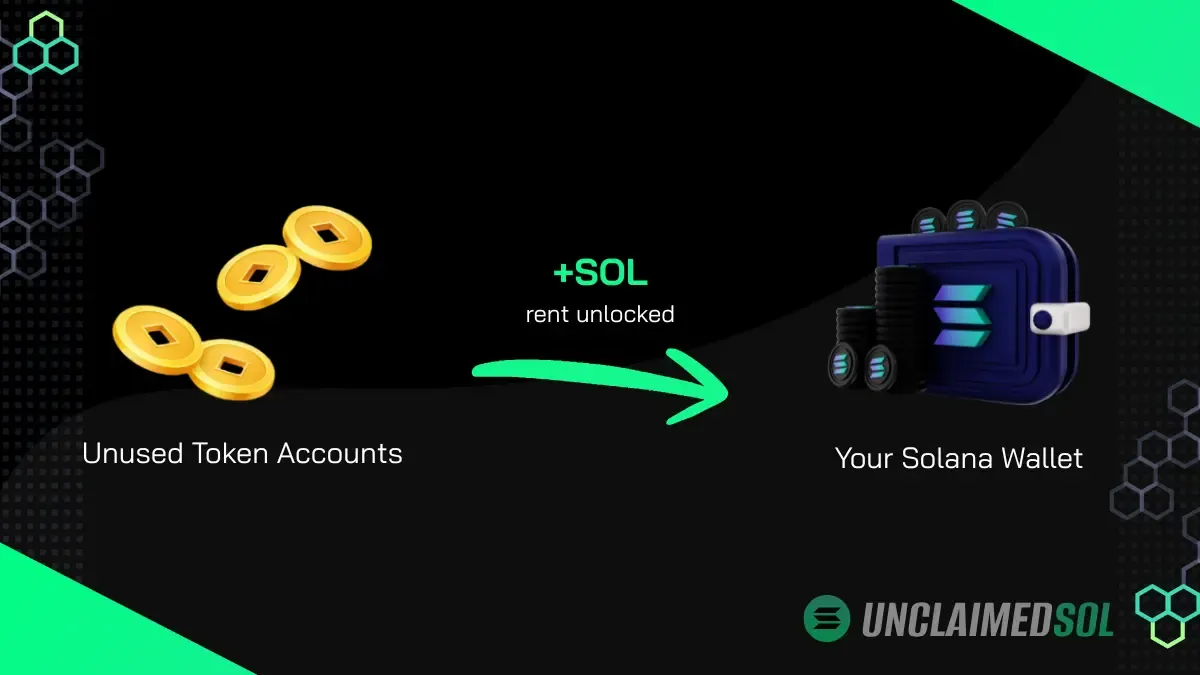
Unclaimed SOL handles standard empty-token-account rent reclaim. A wallet-native cleaner can also be enough if your only goal is closing a few obvious empty accounts.
Use Unclaimed SOL for the fuller guided scan: standard rent reclaim plus clear preview, wallet signing, and broader detection for old wallets, high-activity trading wallets, bot wallets, DeFi-heavy wallets, developer/program wallets, Token-2022 accounts, deactivated stakes, program buffers, spam NFTs, and unclaimed rewards.
The practical distinction is how much of the wallet you want checked: a narrow native cleanup can close obvious empty token accounts, while Unclaimed SOL covers that rent-reclaim use case and checks more reclaimable sources.
The scan is read-only. You do not enter private keys, you do not send an upfront payment, and you review the claim before signing.
For full details, read the complete guide to claiming SOL safely or the security and verification hub.
Free-SOL searches attract fake airdrops, fake faucets, and wallet drainers. A real opportunity should be clear about what you are doing and what you are signing.
There is no reliable public faucet giving meaningful mainnet SOL to everyone. Most legitimate faucets are for devnet or testnet, not real mainnet funds.
Staking can earn SOL rewards if you already hold SOL. It is not free from zero, but it can grow your balance while helping secure the network.
Yes, but it comes with risk. Lending, liquidity pools, and yield farms can produce returns, but rates change and losses are possible.
Sometimes, but many campaigns pay in project tokens instead of SOL. Those tokens may later be swapped for SOL if they have liquid markets.
It checks whether your wallet has SOL locked beyond simple empty token accounts, including Token-2022 accounts, deactivated stakes, program buffers, spam NFTs, and eligible rewards. If there is nothing to reclaim, the scan simply shows that.
Yes. Unclaimed SOL handles standard empty-token-account rent reclaim. A wallet-native cleaner can be enough for a few obvious empty accounts, but Unclaimed SOL is the fuller guided scan when the wallet is old, DeFi-heavy, active with bots or trading, used for programs, or may include Token-2022 accounts, deactivated stakes, buffers, spam NFTs, or rewards.
No. You connect a supported Solana wallet such as Phantom, Solflare, Backpack, or another standard wallet and sign transactions yourself. Never type your private key or seed phrase into a claiming tool.
No private keys required. You review and sign every transaction.